Sylvia Ngige Where women’s power meets real life
Report: Chukwuka Ugokwe, Ministry of Information, Anambra State
Edited with analysis by: Sylvia Tochukwu-Ngige, Sylviangige.com
April 21, 2026 | Awka.
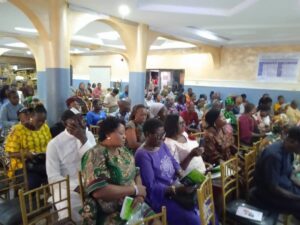
Farmers in Anambra State gathered in Awka for an important one-day seminar designed to help them better understand what the year 2026 may bring in terms of weather, rainfall, and flooding. The event, organized by the Nigerian Meteorological Agency (NiMet) with support from the Nigeria Hydrological Services Agency (NIHSA), aimed to prepare farmers for the realities of climate change and help them make smarter decisions on their farms.
The seminar was held in collaboration with partners including the Bill & Melinda Gates Foundation, the Building Agricultural System Resilience Project in Nigeria, and Sahel Consulting Agriculture and Nutrition Ltd. Together, they focused on equipping farmers with practical knowledge that can protect their livelihoods.
Speaking at the event, the Minister of Agriculture and Food Security, Abubakar Kyari, explained that the training was designed to enlighten farmers about seasonal climate predictions and how to use such information effectively. Represented by Chief Arthur Mbuba, he commended the organizers for selecting Anambra as one of only six states chosen for the programme nationwide. He emphasized that in today’s era of climate uncertainty, access to the right information is just as important as access to seeds and fertilizer.
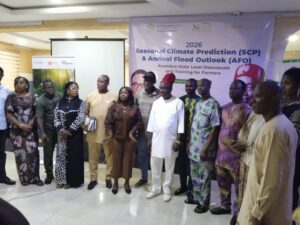
At the heart of the seminar was the 2026 Seasonal Climate Prediction released by NiMet. According to the agency’s Director General, Charles Anosike, the forecast is more than just a weather report—it is an early warning system. Represented by Mr. Desmond Onyilo, he explained that the rainy season in Anambra State is expected to begin around March 23, 2026. This period was identified as the safest time for farmers to begin planting.
He also revealed that the growing season is likely to end between November 27 and December 4. With this timeline, farmers were encouraged to plant early so they can harvest before the rains stop. This simple adjustment, he noted, could make a big difference in crop yield and food security.
However, the prediction also came with serious warnings. Eleven local government areas in the state are expected to experience high rainfall, rising temperatures, and possible flooding. Areas such as Anambra East, Anambra West, Ayamelum, Onitsha North and South, Ogbaru, and Ekwusigo were identified as high-risk zones for flooding. Meanwhile, places like Ihiala, Nnewi North and South, Idemili North and South, and Awka North fall under moderate flood risk.
Officials stressed that these warnings should not be ignored. Farmers and residents in vulnerable communities were advised to take proactive steps, including clearing drainage systems and preparing for possible evacuation if necessary.
Adding to the discussion, Mr. Onyeka Ugochukwu of NIHSA highlighted the dangers posed by flooding, noting that it remains one of the biggest threats to lives, farmland, and infrastructure in the state. He urged communities to act early rather than wait until disaster strikes.
The National Emergency Management Agency (NEMA) also played a key role at the event. Its representative, Mrs. Chinwe Okpara, spoke on the importance of preparedness and risk reduction. She encouraged farmers to pay attention to early warning signs, insure their farmlands where possible, and adopt strategies that can reduce losses. According to her, disaster management in Nigeria is shifting from reactive responses to proactive planning—and farmers must be part of that change.
On the agricultural side, the Programme Manager of the Agricultural Development Programme (ADP) in Anambra State, Mr. Godwin Akujieze, assured participants that extension workers are ready to take this climate information to grassroots communities. This means even farmers in remote villages will have access to the knowledge shared at the seminar.
Another expert, Mrs. Blessing Agambi, spoke on the importance of aligning farming activities with weather patterns. She advised farmers to follow crop weather calendars, use improved and verified seeds, and adopt better farming practices. Poultry farmers, she added, must also adjust to rising temperatures to protect their birds from heat stress.
By the end of the seminar, one message stood clear: climate change is already affecting agriculture, but with the right information and timely action, farmers can still succeed. For Anambra farmers, the 2026 climate prediction is not just a warning—it is an opportunity to plan ahead, minimize risks, and secure a better harvest
Sylvia’s Take
March 23. Write it down. That’s your planting day.
NiMet just told us when rain will start in 2026: March 23. It will stop by November 27. That gives you 8 months to grow food. Miss March, you miss harvest.
If you live in these places: Anambra East, Anambra West, Ayamelum, Onitsha North and South, Ogbaru and Ekwusigo, act now. NiMet says flood will likely hit you. Don’t wait for government.
The Minister said “information is as important as fertilizer.” He’s right. But information alone won’t buy seeds.
So I’m asking:
- Government: Tell us where to buy cheap, good seeds. Paste the list in markets.
2. ADP workers: Leave Awka hotels. Go to villages. Use town criers. Teach at women’s meetings.
3. You: Don’t farm alone. Join 3 women. Buy one bag of good seed together. Plant together. Share the food.
We always praise farmers for being “strong.” Our mothers are not strong. They are tired.
NiMet gave us a date. NIHSA gave us a map. If flood still carries our farms in 2026, it’s not climate change. It’s because we heard and did nothing.
Bottom line: March 23 is not advice. It’s an order.
Tell your neighbor. Tell your church. Plant early or explain hunger in December.
Sylviangige.com | Where women’s power meets real life.
Links:
https://nimet.gov.ng
https://anambrastate.gov.ng