Sylvia Ngige Where women’s power meets real life
Report by: Chukwuka Ugokwe
Edited with analysis by: Sylvia Tochukwu-Ngige | Sylviangige.com
June 1, 2026
The International Federation of Women Lawyers (FIDA) Nigeria has raised concerns over the persistent under-representation of women in leadership positions within Nigeria’s judiciary, despite the growing number of female legal professionals and significant milestones achieved over the years. FIDA Nigeria, therefore pushes to end this gender disparity in Nigeria.
FIDA Country Vice President and National President, Mrs. Eliana Martins, expressed the concern in Awka, Anambra State, during a consultative dialogue with women judicial officers. The event was supported by Co-Impact, an international non-profit organisation.
The dialogue, themed “Probing Women’s Career Progression and Leadership Pathways in the Judiciary,” aims to promote the inclusion and advancement of women in Nigeria’s judiciary through institutional reforms.
Represented by the National Publicity Secretary, Mrs. Chineze Obianyo, Martins lamented the enduring structural gender imbalance within the judiciary, despite post-independence progress and the increasing participation of women in legal education and professional practice.
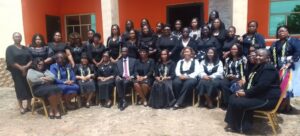
She explained that the engagement would provide an opportunity to examine the barriers affecting women’s career progression in the judiciary, including recruitment, retention, promotion, leadership opportunities, and workplace experiences.
According to Martins, although Nigeria has recorded historic achievements with the emergence of Justice Aloma Mariam Mukhtar as the first female Chief Justice of Nigeria and Justice Zainab Bulkachuwa as the first female President of the Court of Appeal, women remain significantly under-represented in judicial leadership roles.
“Currently, only four out of the 13 justices of the Nigerian Supreme Court are women, representing about 31 per cent.
“Although the appointment of the current female Chief Justice in 2024 marked a significant milestone, it has not sufficiently addressed the wider systemic imbalance,” she said.
Martins attributed the disparity to entrenched socio-cultural biases, discriminatory workplace practices, limited access to leadership opportunities, lack of institutional safeguards, opaque promotion processes, and stereotypes that question women’s competence, especially in matters involving customary or Islamic law.
She added that the dialogue would help gather State-by-State data on the challenges confronting women judicial officers and lay the groundwork for a more inclusive and gender-equitable judiciary.
“This engagement is a critical step toward promoting evidence-based reforms that are inclusive, equitable, and responsive to the needs of women judicial officers, in line with the principles of fairness, diversity, and gender justice,” she added.
Earlier, the Chairperson of FIDA in Anambra State, Mrs. Amara Muojeke, revealed that 10 states with low female representation in the judiciary were selected for the project, which is being implemented simultaneously across the country.
She noted that Anambra and Ebonyi states were chosen from the South-East zone.
According to Muojeke, the initiative seeks to identify factors limiting women’s advancement within the judiciary despite the large number of female magistrates and legal practitioners in Nigeria.

“As of 2023, Nigeria had 13 Supreme Court justices, but only four were women. In Anambra State, only five out of 29 High Court judges are women.
“Meanwhile, women dominate the magistrate courts and are actively represented among legal practitioners.
“So, what exactly is the challenge? Is it cultural, policy-related, qualification-based, or simply a lack of opportunities?” she queried.
Muojeke said the five-year project would involve key stakeholders, including the Chief Judge, Attorney General, Nigerian Bar Association (NBA), Judicial Service Commission (JSC), female judges, magistrates, and customary court officials.
She expressed optimism that the initiative would produce meaningful reforms, citing similar Co-Impact-supported projects in countries such as Kenya that yielded positive results.
Responding to possible criticism over advocacy for women’s inclusion, Muojeke stressed that the Nigerian Constitution guarantees equal opportunities for all citizens.
“If men can occupy such positions and qualified women are available, they should equally be encouraged to rise and lead,” she said.
She, however, described Anambra as relatively gender-inclusive, citing the appointment of women into strategic positions by successive administrations in the State.
————-
Sylvia’s Take
Can I be honest with you for a minute? This one actually hurts.
We clap for “first female CJN”. We celebrate “first female President of Court of Appeal”. We post it, we share it, we feel proud. But deep down, my heart breaks a little.
Because when “first” is still the only story we’re telling 10, 15 years later… it means we celebrated the door opening, then watched someone slam it shut again. Slowly. Quietly. Like it never happened.
31% women at the Supreme Court in 2024. In THIS Nigeria. Where our sisters are graduating law school with first class. Where women are winning cases, mentoring juniors, holding families together AND holding court. Yet the big chair? Still feels out of reach.
And then they tell us “customary law is too complicated for women”. Ah, please. A woman who survived 5 years of law lectures, 1 year of law school stress, NYSC in the sun, and sleepless nights reading case law… you’re telling me she can’t handle customary law? No. The problem isn’t her brain. It’s bias. It’s access. It’s the system whispering “this seat is not for you”.
That’s what pains me most. It’s not that women aren’t qualified. It’s that they have to fight 10x harder just to be seen.
But you know what gives me hope? FIDA isn’t just crying about it. They’re doing the work. Collecting data. Sitting with real women judges. Asking “what hurt you? what stopped you?” That’s how healing starts. That’s how Kenya began to change too. Facts + courage = change.
Anambra, thank you for trying. 5 out of 29 is not enough, but at least you started. To other states: what’s your excuse now?
So I’ll ask you, and I’m asking myself too: If our Constitution boldly says “equal opportunity for all”, why do our mothers, sisters, and daughters still need to beg for a seat at the table?
To every lady reading this with law books on your desk or a wig in your bag… I see you. I feel you. Don’t stop. That gavel, that robe, that big chair with your name engraved on it? It’s yours. Fight for it. We’re fighting with you.
Nigeria’s judiciary should look like Nigeria. Women make up half of us. Shouldn’t justice wear our face too?
Let’s talk. What is your take? Does this make your blood boil too? Or do you think I’m overreacting? Drop it in the comments. Let’s feel this. together 👇👇
Sylvia Tochukwu-Ngige | Where women’s power meets real life.
External Links:
https://.www.co-impact.org
https://.www.nic,gov.ng
www.nigeria.gov.ng